Konserthuset 1926–2026, a Century of Swedish Grace


Stockholm’s Konserthuset was born as a “temple in honour of music” in the very heart of the Swedish Grace era. It blends architecture, craft, and ceremony in one elegant, understated statement.

For architects, designers, and cultural explorers, Konserthuset’s origin story shows how a city can transform artistic and civic ambition into architecture and design that lasts into a new century.

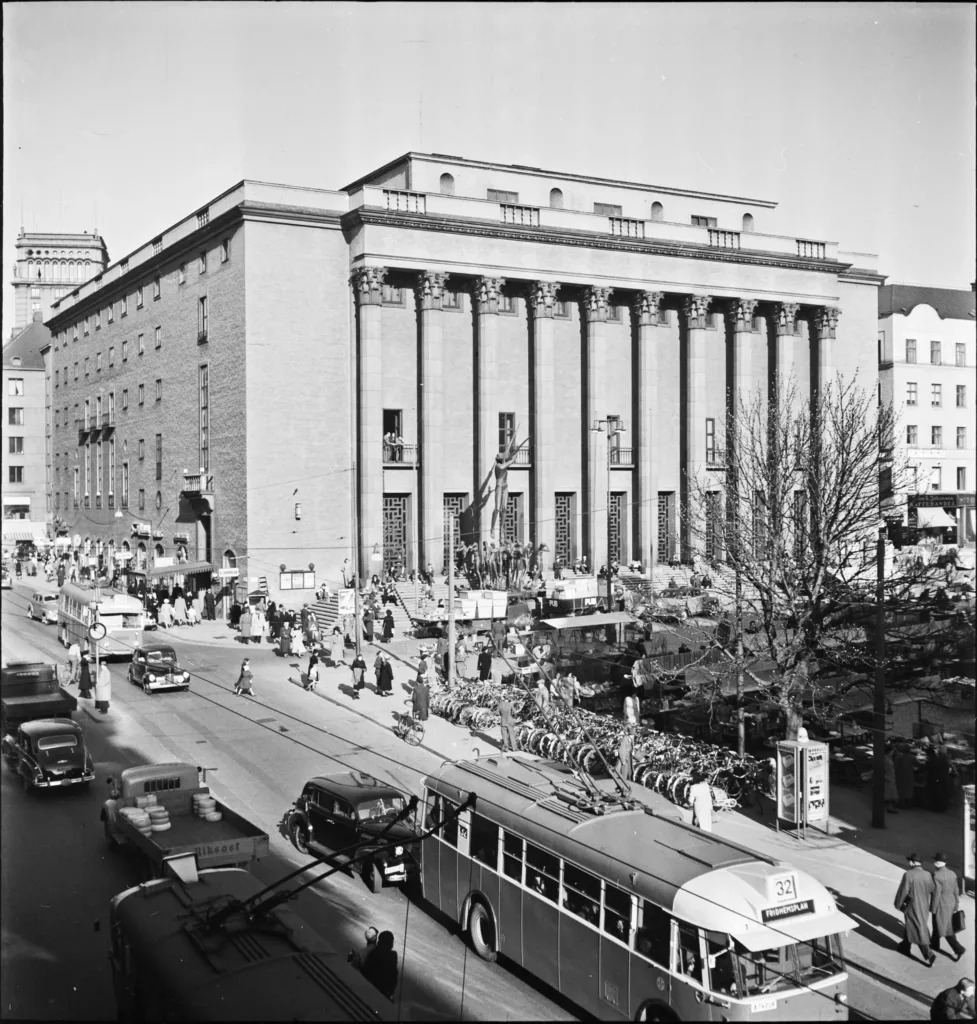
Hötorget med Konserthuset historisk bild
Photo: From collections of Spårvägsmuseet.
Historical photo of architect Ivar Tengbom, the man behind Stockholm Concert Hall as Swedish Grace masterpiece


A new home for music and ceremony


In the early 1920s, Stockholm sought a modern, purpose-built home for the Royal Stockholm Philharmonic Orchestra and a dignified setting for the Nobel Prize Award Ceremony.

The answer became Konserthuset at Hötorget, designed by architect Ivar Tengbom and completed in 1926.

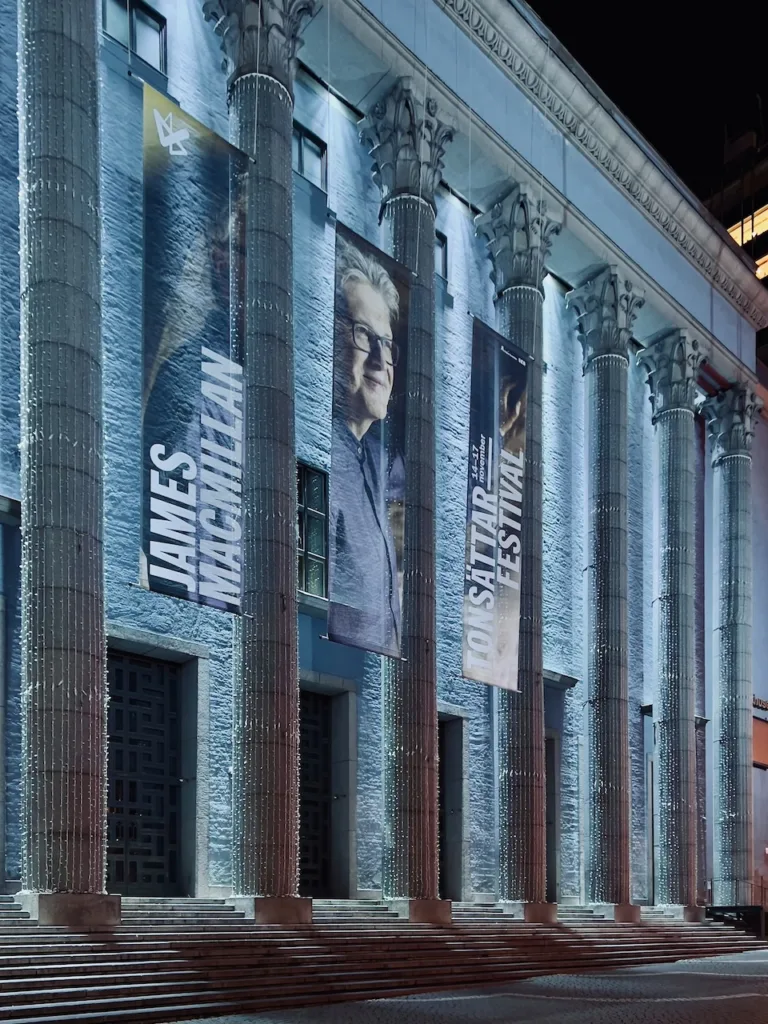
Columns of Stockholm Concert Hall seen at night with main entrance
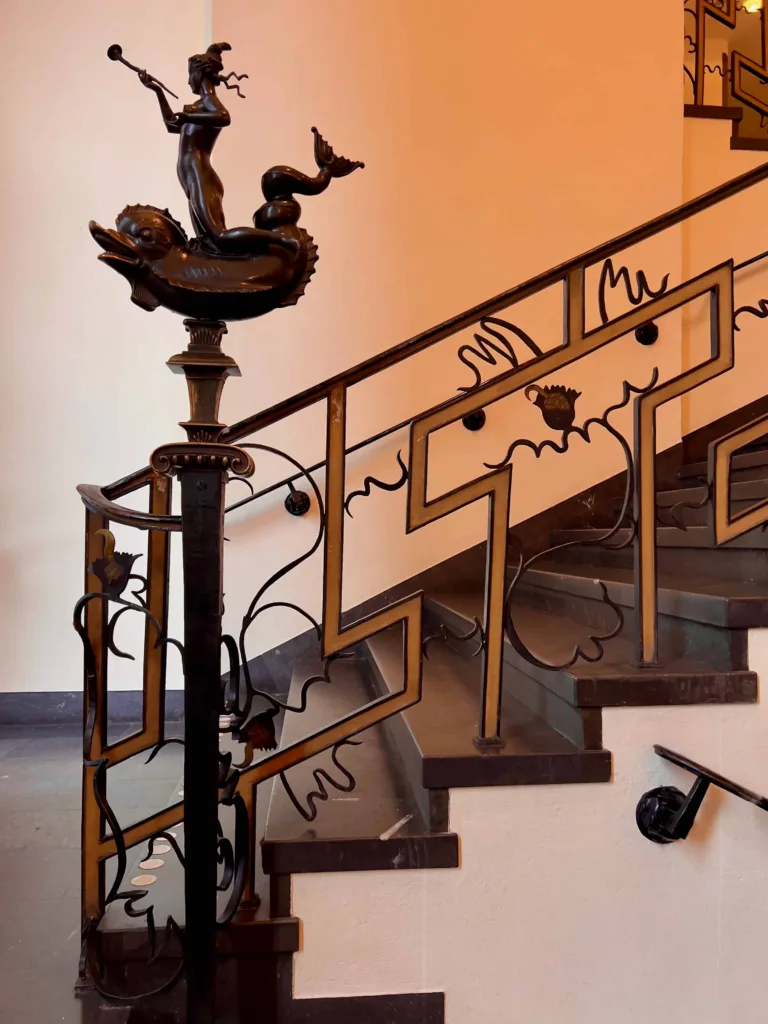
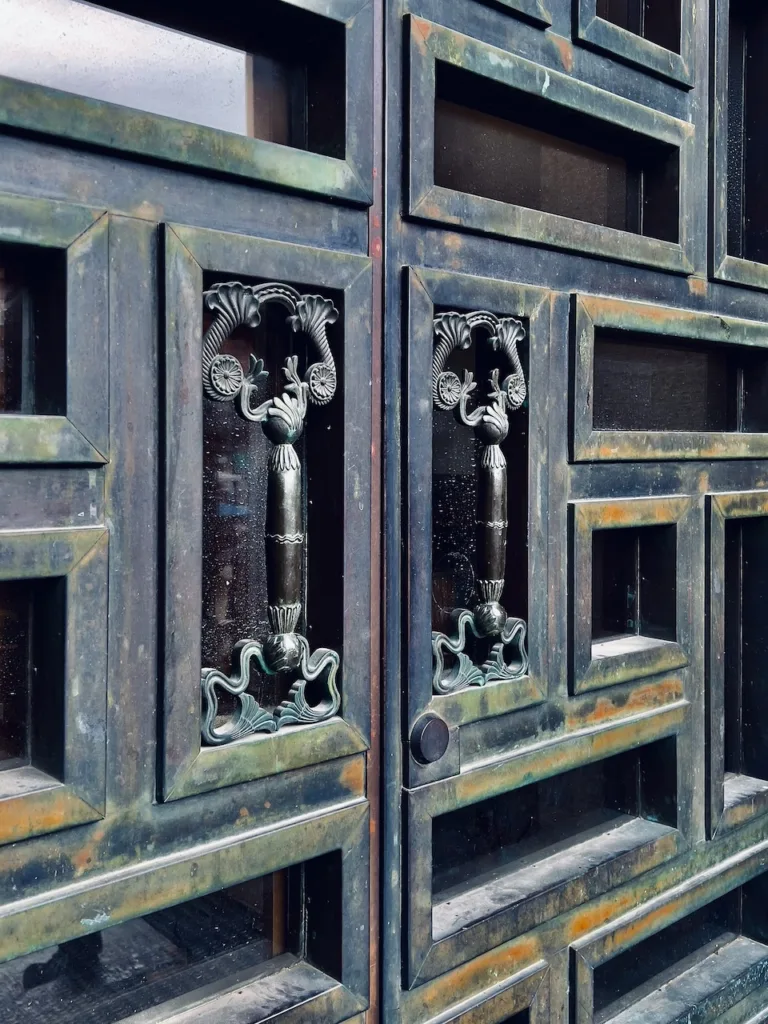
Iron cast door to main entrance of Stockholm Concert Hall with decorative details representing Swedish Grace style


From the outset, the building was imagined not only as a concert venue but as a civic stage where music, science, and public life would meet each December.

That dual role endures today. The same hall that hosts symphonies each season continues to frame Nobel Prize laureates in December.

Nobel Prize Laureats pictures
Wooden instarsia work of typical Swedish Grace era
Red chairs of Concert Hall in Stockholm originally by famous furniture designer Carl Malmsten
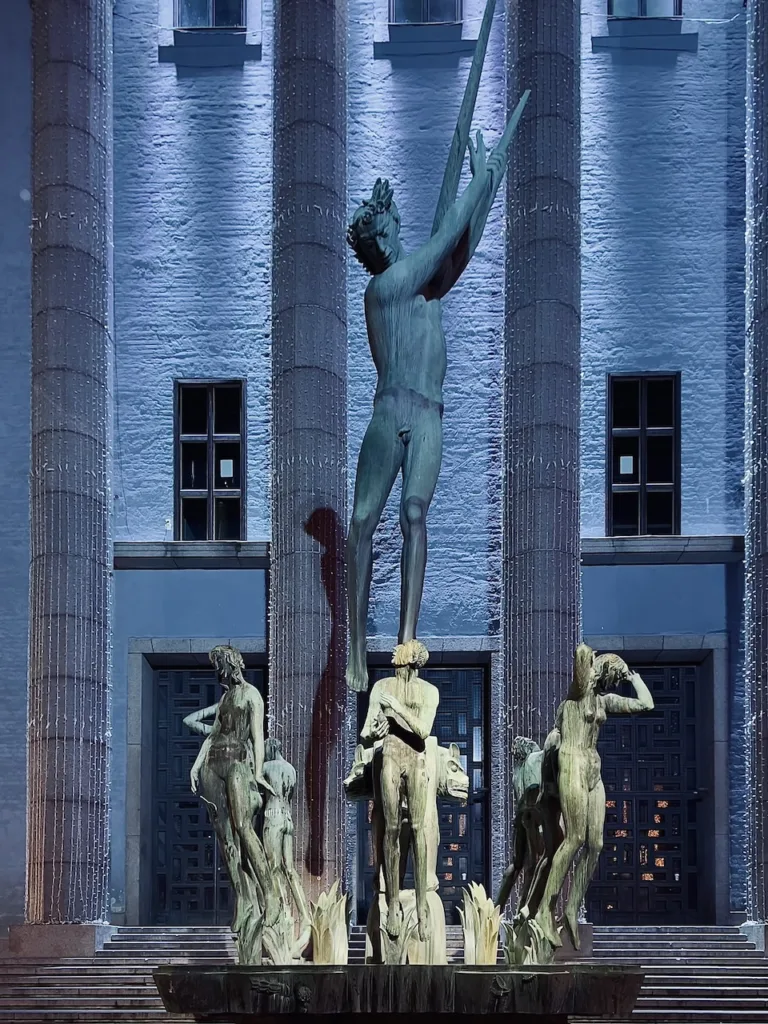
Carl Milles Orpheus sculpture seen by night in front of main entrance to Stockholm Concert Hall


Swedish Grace in blue and stone

Konserthuset remains one of the clearest architectural expressions of Swedish Grace—the Nordic interpretation of Art Deco that balanced classical order with modern restraint.

Ivar Tengbom gave the building a light blue façade and a grand colonnade of slender Corinthian columns. He created a landmark silhouette that feels both ancient and modern, pared against the bustle of Hötorget. The chosen shade of coelin blue was inspired by the sky and was meant to give the structure an airy presence, as if it might float above the square.

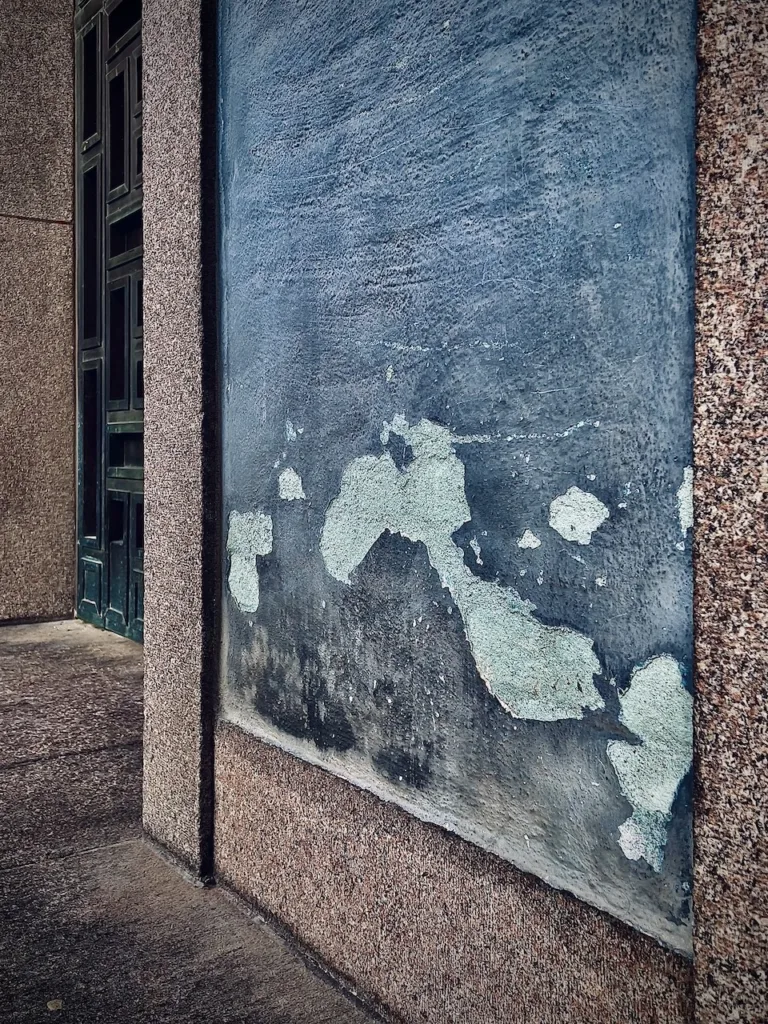
The original 1926 paint, developed with artist Isaac Grünewald, was an ethereal sky-blue tone that embodied this vision. But the pigment faded quickly as the plaster deteriorated, and by the 1930s it had darkened to a brownish hue that remained for decades. It wasn’t until the 1970s that the intended blue returned, though urban pollution soon dulled it again.

A major restoration, funded by the Erling Persson Foundation, is now ongoing to revive the pure coelin blue façade and refurbish interior spaces. The project will be completed by autumn 2026, when Konserthuset reopens to the public in time for its centennial celebrations.

Restauration of blue colour facade of Stockholm Concert Hall
Trails of brown and blue colours of the previous layers of facade of Stockholm Concert Hall now in renovation during 2026

A collaborative work of art

From its inception, Konserthuset was conceived as a total work of art. A synthesis of architecture and applied art.

Ivar Tengbom invited Sweden’s leading artists and designers of the 1920s to contribute, turning the building into a three-dimensional catalogue of Swedish Grace craftsmanship.

Carl Milles created the Orfeusgruppen fountain on Hötorget and the muses within.

Einar Forseth’s mosaics shimmer across floors and ceilings.

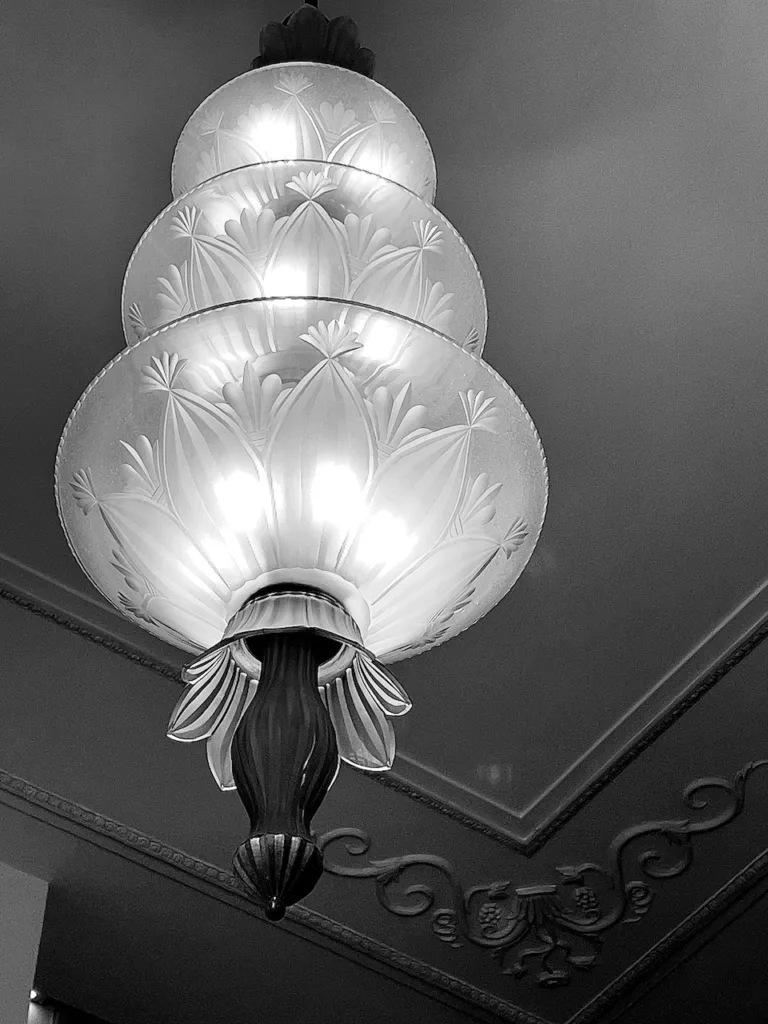
Simon Gate and Edward Hald designed glass fittings that sculpt light.

Carl Malmsten furnished the interiors with pieces that marry comfort, craftsmanship, and quiet elegance.

For interior designers stepping into Konserthuset today, the building reveals its timeless allure. Every surface, object, and artwork seamlessly forms one cohesive elegance and the finest expression of Swedish Grace artistry.

Glass work and lamp decor representing Swedish Grace style, by Simone Gate and Edward Hall
Furniture in original by Carl Malmsten for Stockholm Concert Hall
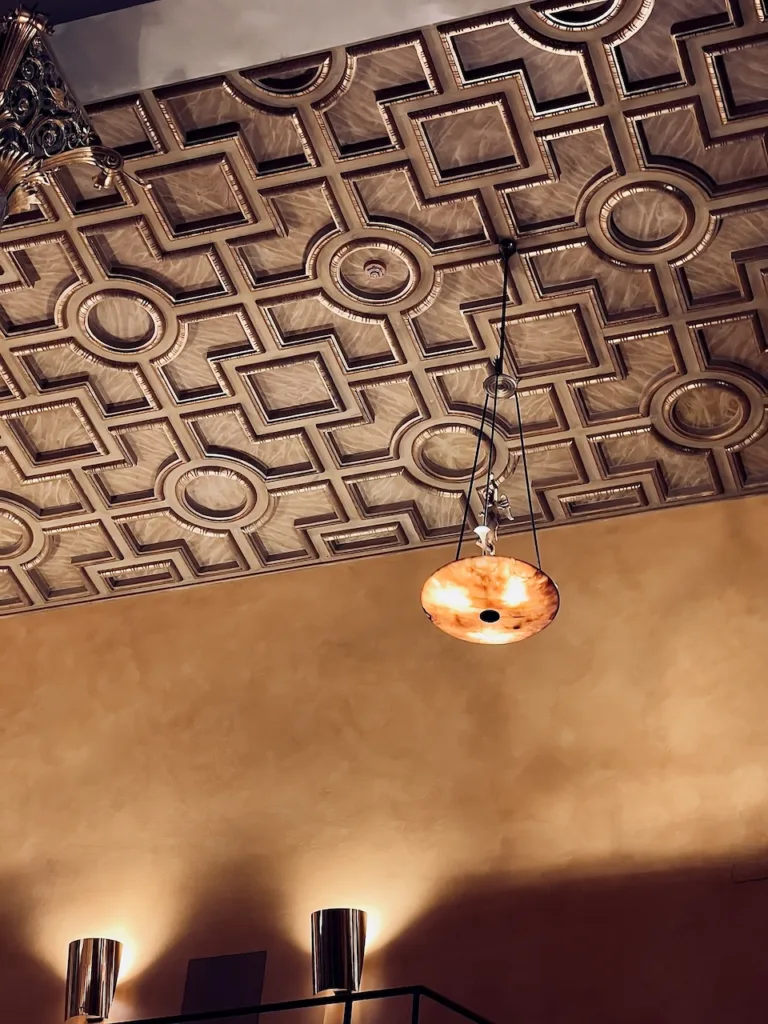
Swedish Grace Interior design details of the Concert Hall in Stockholm with lamps by Ansgar Almquist


Inside the Nobel stage set


The Main Hall is the heart of the building’s narrative, designed as a flexible ceremonial room adaptable for different occasions without losing its architectural clarity.

Each year, it transforms for the Nobel Prize Award Ceremony with textiles, lighting, and floral arrangements that highlight its neoclassical rhythm and Swedish Grace detailing.

From the balcony, visitors can read the hall’s plan like a drawing—the orchestra on its structured stage, the laureates and committee centered below, the audience rising around in balanced tiers. Few other places in the world allow one to sit where Nobel laureates have been honored for nearly a century, yet still feel the intimacy of a hall designed primarily for listening.

When open, Konserthuset’s guided walking tours offer an excellent opportunity to step inside its restored interiors, learn about the artists and craftsmen behind its details, and see firsthand how architecture, art, and civic identity converge within these walls.


Reading Konserthuset as a design lesson


For architects, Konserthuset offers a study in how monumentality can remain humane. Its composition is grand, yet its details like mosaics, wood, crafted light fittings, return to the scale of the hand.

For interior designers, it shows how atmosphere arises through color, material, and art without overwhelming structure.

And for global travelers, the building’s origins add resonance to any visit. What appears as a blue concert hall is, in truth, built to host both everyday concerts and the world’s most-watched celebration of intellect and creativity.

Interior design details by sculptor Ansgar Almquist inside of Stockholm Concert Hall
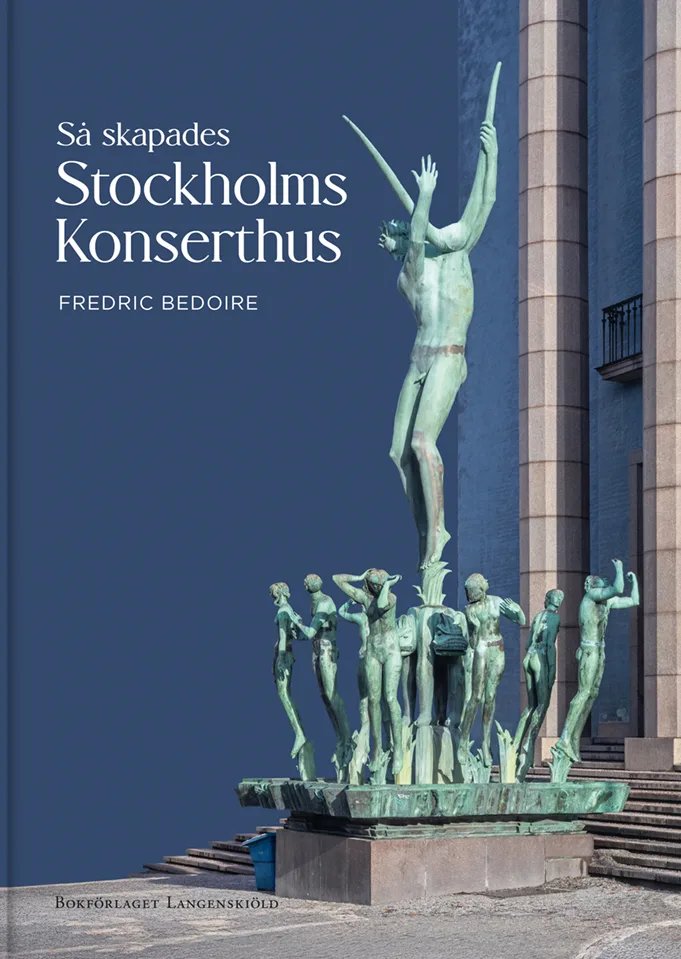
Så skapades Stockholms konserthus omslag till boken av Fredric Bedoire

A century of harmony

In 2026, Konserthuset celebrates its hundredth anniversary, marking a full century of music, ceremony, and artistic collaboration.

This milestone is also the subject of a forthcoming book by author and historian Fredric Bedoire, whose richly illustrated volume explores Konserthuset’s artistic genesis, restoration journey, and enduring role in shaping Sweden’s modern identity.

IN SPOTLIGHT