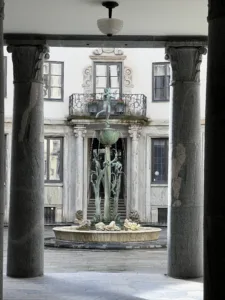
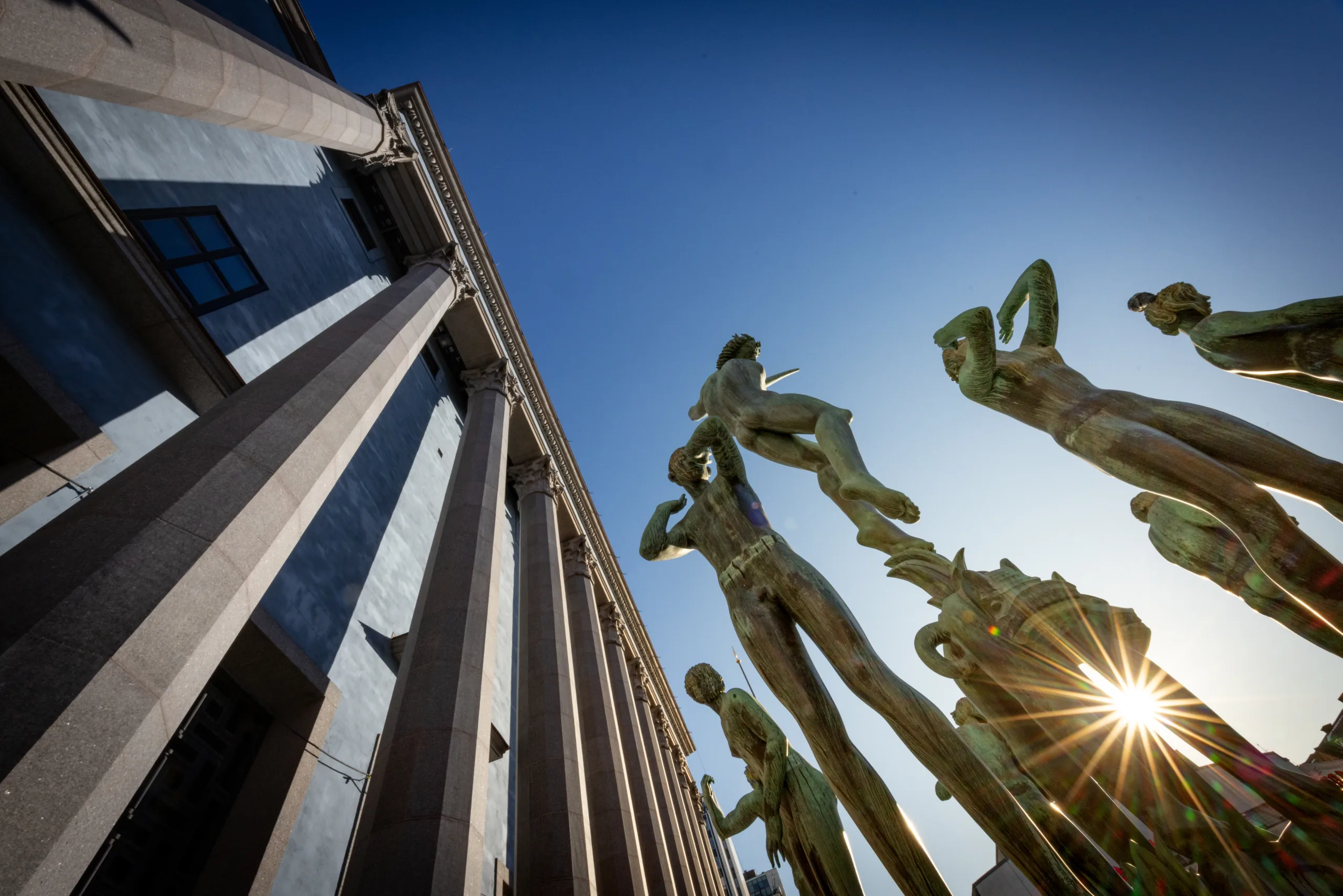
When a building quietly becomes shorthand for an entire era, it deserves its own biography.
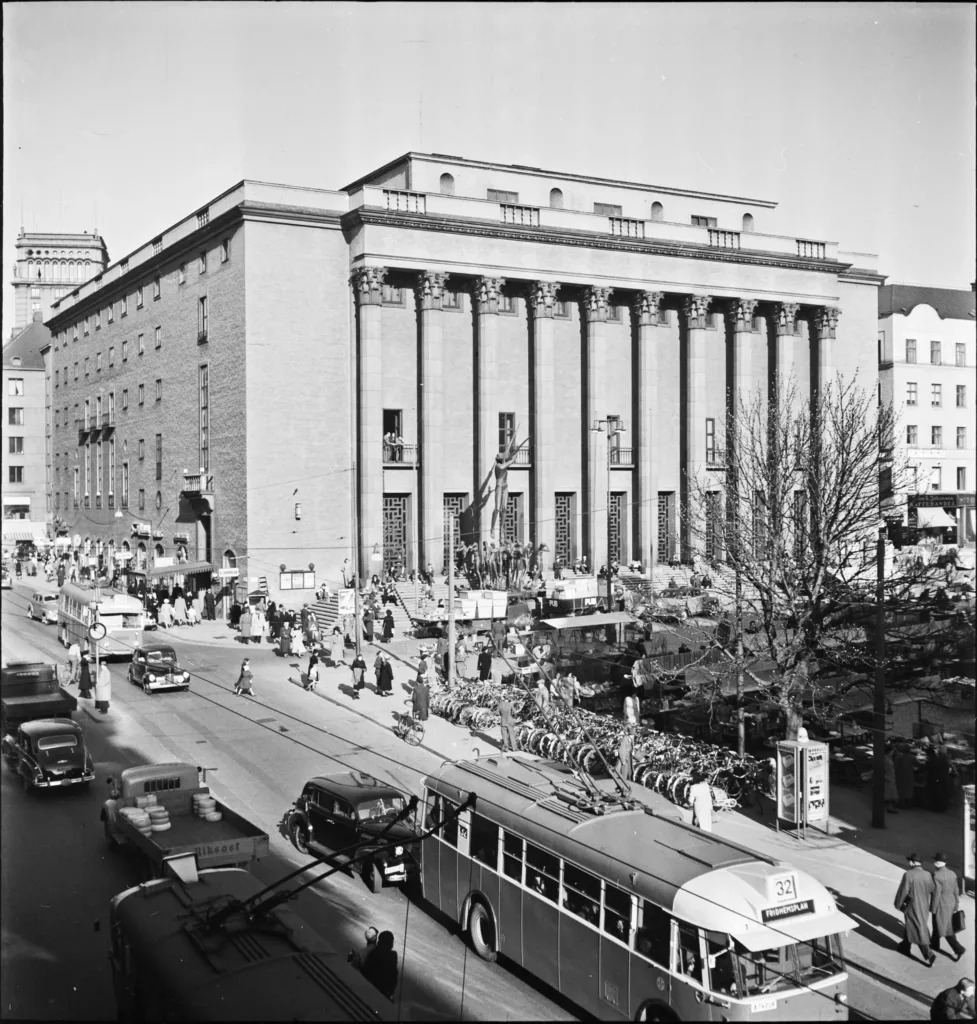
“Så skapades Stockholms Konserthus” (“How Stockholm Concert Hall Was Created”) does exactly that: it tells the full story of the blue temple of music on Hötorget, one of the most complete Swedish Grace environments ever realised.
A 1920s total work of art
The book presents Konserthuset as a true allkonstverk – a total work of art – born in the charged cultural climate of 1920s Sweden, between two world wars, when architecture, painting, sculpture and craft moved in step.
Ivar Tengbom’s sober yet monumental Nordic Classicism forms the architectural frame, but the interiors are where Swedish Grace comes fully alive with gilded ceilings, intarsia doors, mosaics, textiles, lighting and sculpture, all orchestrated to celebrate music and modern Stockholm.

For readers interested in Swedish Grace, the Concert Hall is not just another building on the list; it is one of the style’s key case studies. It condenses the movement’s love of classical order, rich materials and contemporary urban life into a single ensemble that still serves as the stage for the Nobel Prize ceremonies and the Royal Stockholm Philharmonic Orchestra.
The Swedish Grace constellation inside Konserthuset
One of the strengths of Bedoire’s book is how it follows the many hands that shaped this building, showing Konserthuset as a meeting place for the leading figures of Swedish Grace and related movements.
Ivar Tengbom – Architect of the exterior and overall spatial concept, using a temple-like volume and giant order colonnade to give Stockholm a new civic icon.
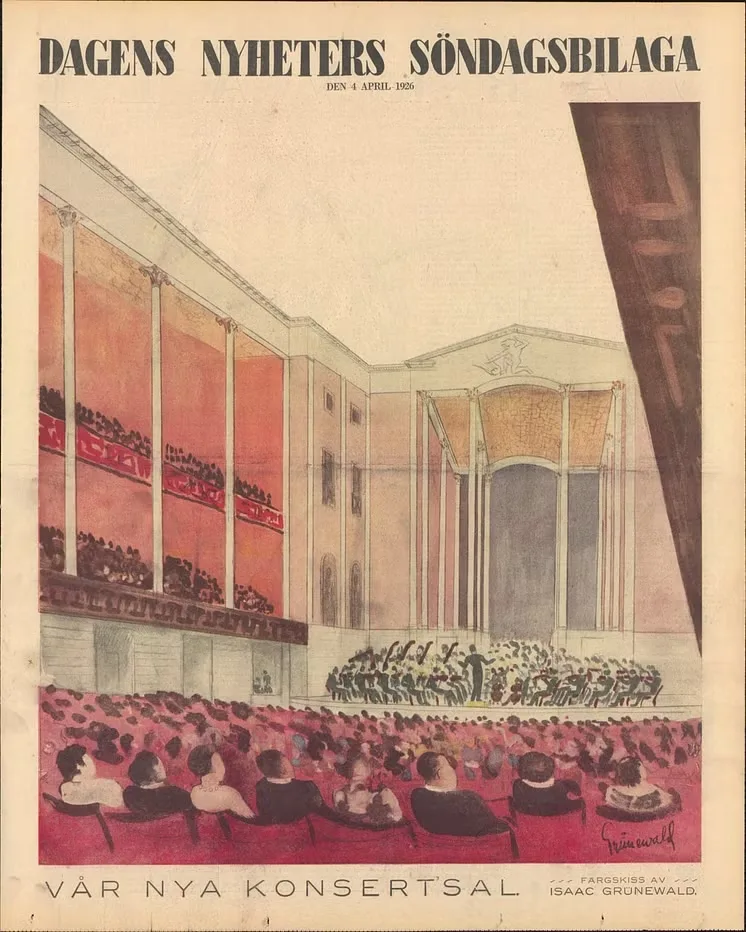
Isaac Grünewald – Modernist painter responsible for bold murals and decorations, bringing a vivid, expressionist colour language into a classically ordered space.
Einar Forseth – Creator of mosaics and decorative programs that link Konserthuset to his more famous Golden Hall at Stockholm City Hall, using Byzantine-inspired gold and colour to dramatise the interiors.
Carl Milles and Ansgar Almqvist – Sculptors whose bronzes and reliefs animate staircases and foyers, balancing Tengbom’s strict geometry with movement and mythological references.
Ewald Dahlskog – Master of intarsia whose mahogany inlays and doors compose “frozen music” in wood, echoing the rhythm of Tengbom’s architecture.
Elsa Gullberg and other textile artists – Weavers whose wall hangings and carpets warm the stone and stucco, linking Konserthuset to the world of Märta Måås-Fjetterström and Barbro Nilsson.
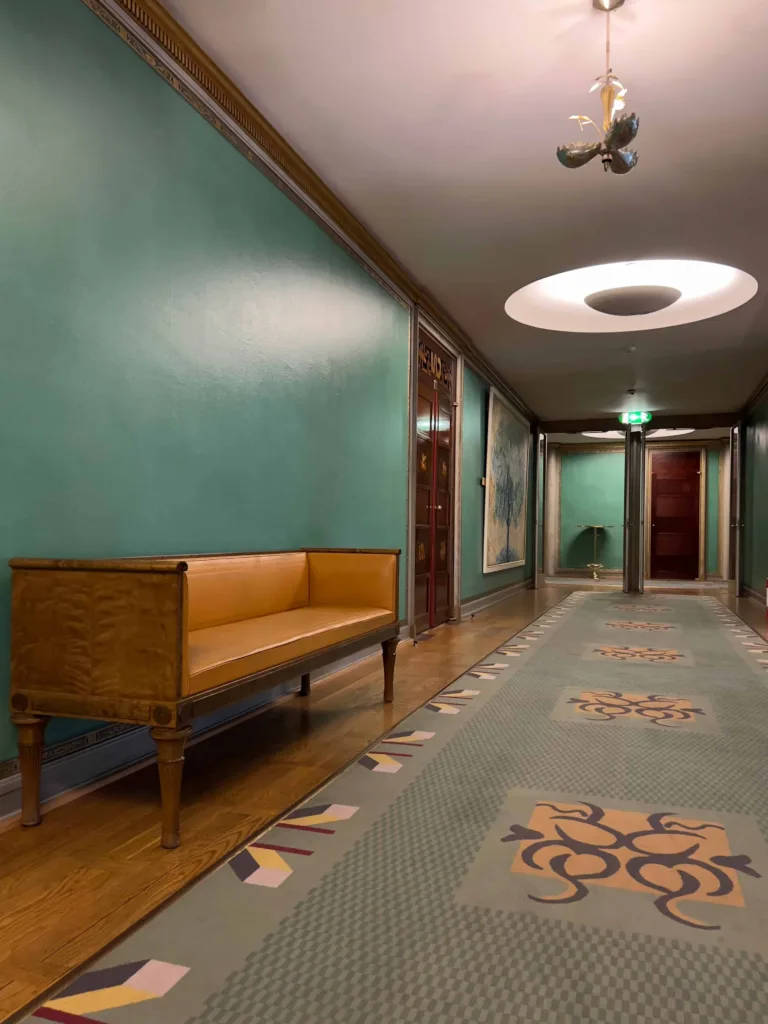

For anyone mapping Swedish Grace, Konserthuset becomes a hub. The same names appear at the 1925 Paris Exhibition pavilion, at the Swedish Institute in Rome, on transatlantic liners like M/S Kungsholm and in the major museum collections of Nationalmuseum and Röhsska in Gothenbourg.
New sources, new images
The book’s promise lies not just in re-telling a familiar story, but in the sources it brings to light.
Bedoire draws on previously unpublished drawings, letters and archival material, opening a window onto the design decisions, compromises and collaborations that shaped the building. Newly digitised photographs from the 1920s are set alongside a rich series of contemporary interior photographs, making it possible to compare the original vision with the building as we experience it today.
For Swedish Grace researchers and enthusiasts, this mix of visual and documentary material is particularly valuable. It allows you to trace how specific motifs, eg. a carved door leaf, a lighting armature, a mosaic field, relate both to international Art Deco and to Sweden’s own tradition of tjugotalsklassicism.
It also clarifies how Konserthuset fits into the broader career of Ivar Tengbom, from the Stockholm Concert Hall to the Swedish Institute in Rome.
Fredric Bedoire, an authoritative guide
Author Fredric Bedoire brings decades of architectural-historical work to this subject.
As professor emeritus of architectural history at the Royal Institute of Art in Stockholm and docent in art history at Stockholm University, he has written more than thirty books on Swedish architecture and urban history, including studies of seventeenth-century palaces, Norrmalm’s transformation in the age of the great power and the emergence of modern Stockholm.
Essential chapter on Swedish Grace
With Konserthuset celebrating its centenary, interest in its design story is resurfacing through dedicated anniversary programs and renewed attention to the art integrated into the building.
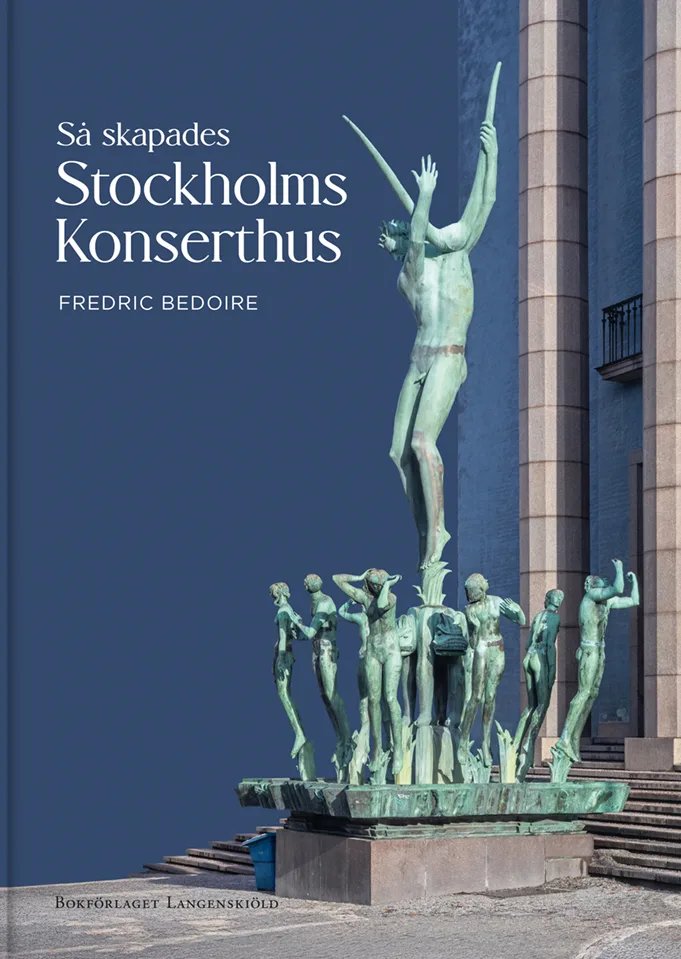
“Så skapades Stockholms Konserthus” published by Langenskiöld offers a detailed narrative of how one of the movement’s key buildings actually came into being.