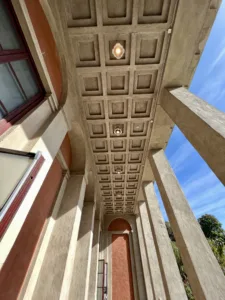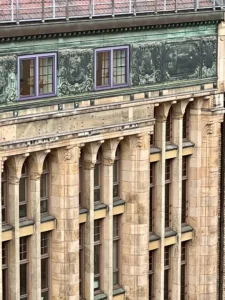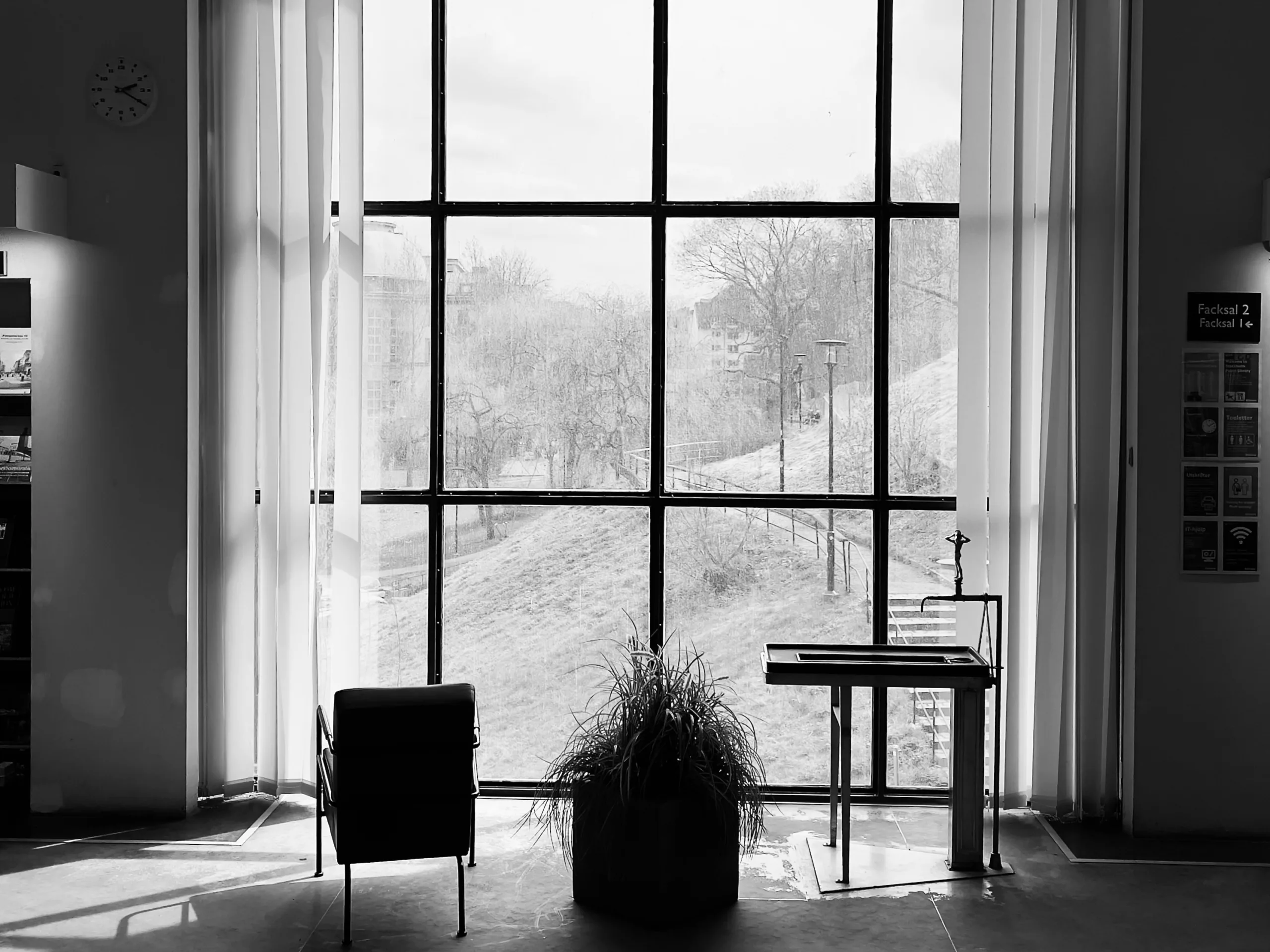
Stockholm Public Library—Stadsbiblioteket—stands among the city’s most recognisable landmarks. An architectural icon, it draws locals and visitors alike, captivating architectural tourists from Sweden and beyond.
Gunnar Asplund completed it around 1928, at Swedish Grace’s height and amid Nordic Classicism’s sweep across Scandinavia. Neoclassical geometry evokes ancient forms, enriched by that era’s leading craftsmen and artists in modern interiors.
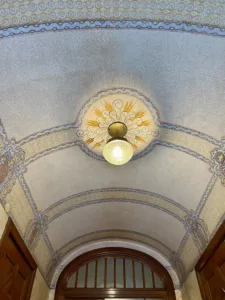
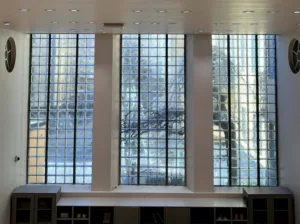
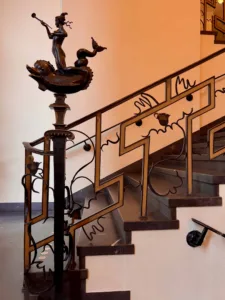
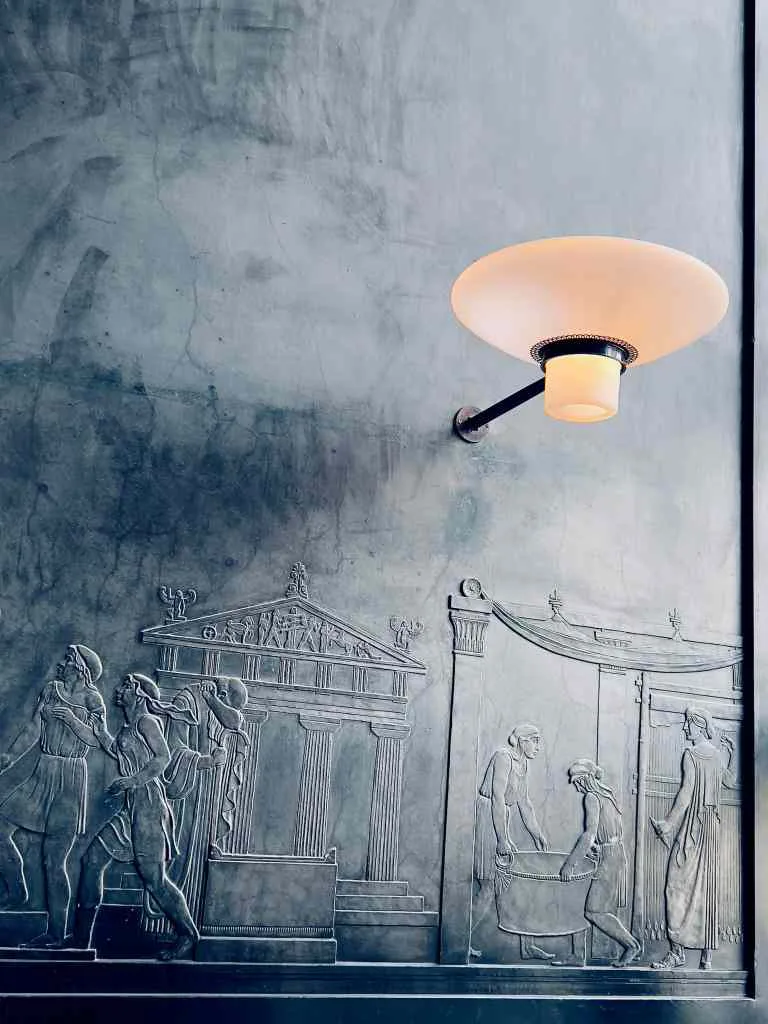
Photos of the library’s architecture appear in a separate section here. This post examines its interior design—focusing on colours and materials.



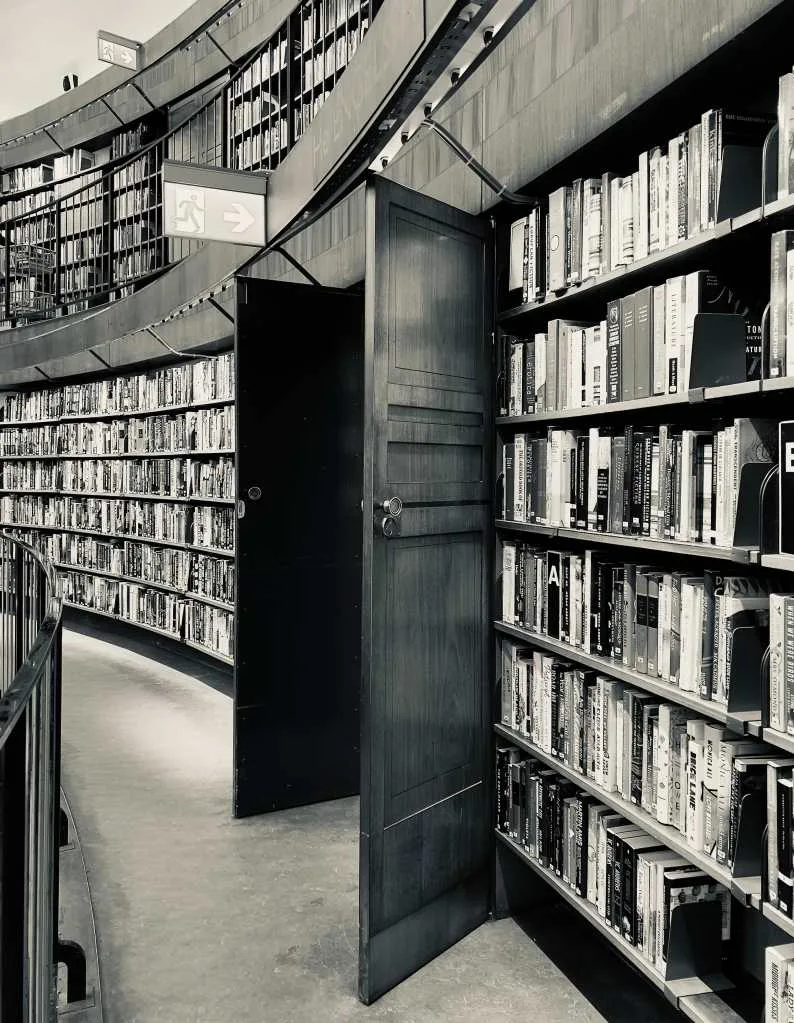
Open access to library books was revolutionary then. Stadsbiblioteket’s rotunda shape grants visitors direct reach to volumes across sections and floors. It houses some 40,000 books, including those in rooms beyond the main galleries.
Book galleries mimic amphitheatres with their stair-like tiers. Each level relates to the others in stepped formation. This design enhances both access and visual drama.
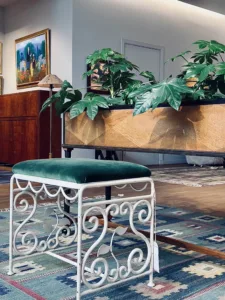
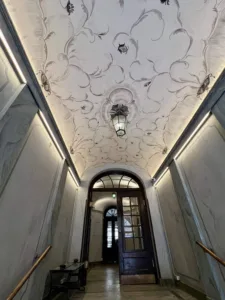
Veneered wood forms the core of the interior design. Many elements feature rounded vault shapes, echoing patterns of delicate colonnettes. This creates a refined, architectural warmth.